
Amla and Bhringraj for Hair: A Simple Guide to Two Ayurvedic Herbs
Kayee Ayurveda · 25 October 2026
If you have looked at Ayurvedic hair care products, you have probably seen two names again and again: amla and bhringraj. They show up in hair oils, shampoos and conditioners across India. This guide explains what they are, why they are often used together, and how to use products made with them in a sensible, realistic way.
What is amla?
Amla is the Indian gooseberry, the small, sour, pale green fruit of the tree Phyllanthus emblica. In Ayurveda it is called amalaki and has been used for centuries, both as food and in traditional preparations. The fruit is well known as a source of vitamin C.
In hair care, amla has traditionally been used in oils, in dried powders mixed into pastes, and in rinses. You will often find it listed in Ayurvedic hair oil recipes and in shampoos that aim for a gentle, herbal feel.
What is bhringraj?
Bhringraj is a herb known in English as false daisy (Eclipta prostrata, sometimes written Eclipta alba). In Ayurvedic texts and everyday use it is nicknamed keshraj, which roughly means the “king of hair”. It is one of the most common herbs in traditional Indian hair oils, usually infused into a base oil.
Why are amla and bhringraj used together?
Traditional hair oil recipes often combine several herbs, and amla and bhringraj are two of the best known partners. People pair them because of long habit and cultural familiarity: they are easy to find, they have been used together in many households for generations, and products that combine them are simple to understand. A “complete routine” built around the same two herbs, an oil, a shampoo and a conditioner, is a convenient way to follow one idea consistently.
How are amla and bhringraj used in hair care?
- As an oil. The herbs are infused into a base oil and massaged into the scalp and lengths before washing. This is the most traditional use.
- In a shampoo. Herbal shampoos use the same ingredients in a wash-off product for regular cleansing.
- In a conditioner. Used on the lengths after shampooing to leave hair feeling softer and easier to comb.
- As a powder or paste. Dried herb powders can be mixed with water or curd to make a hair pack.
What should you realistically expect?
Herbs do not change your hair type or genetics, and no oil works overnight. What many people notice from a regular oiling routine is how their hair feels: softer, smoother, easier to detangle and less dry-looking. Hair care is slow, so give any routine several weeks of regular use before judging it, and judge it by how your hair and scalp feel.
Hair fall has many causes, including stress, diet, hormones, medical conditions and seasons. A herbal routine is a care habit, not a treatment. If your hair loss is sudden, patchy or worrying you, speak to a doctor.
How to choose a hair oil
- Read the ingredient list and check which base oil is used. Some people prefer coconut, others sesame or lighter oils.
- Check for fragrance if your scalp is sensitive.
- Do a patch test on a small area of skin first.
- Be sceptical of any product that promises fixed results in a fixed number of days.
Using amla and bhringraj products from Kayee Ayurveda
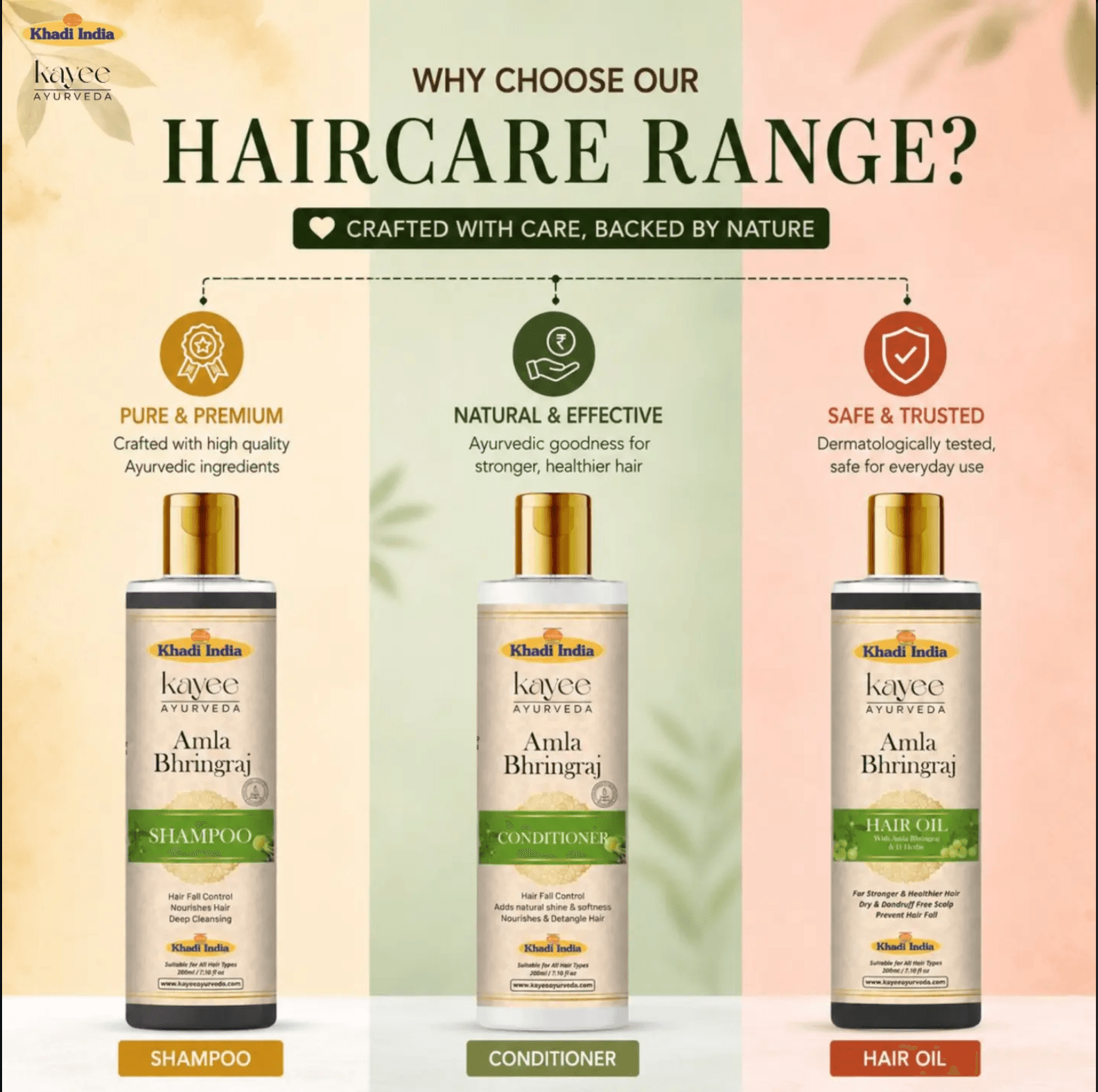
If you would like to try the routine, Kayee Ayurveda offers the herbs in three forms: Amla Bhringraj Hair Oil (210 ml), Amla Bhringraj Shampoo and Amla Bhringraj Conditioner. You can buy them separately or together as the Amla Bhringraj Hair Care Combo. Delivery is free across India and Cash on Delivery is available.
New to oiling? Start with our guide to hair oiling in winter, or follow the three-step Ayurvedic hair care routine.
Frequently asked questions
Can I use an amla and bhringraj oil every day?
Most people oil their hair once or twice a week. There is no strict rule, but daily oiling usually leaves hair heavy. Follow the instructions on the label, and stop if your scalp feels irritated.
Is it suitable for an oily scalp?
Use a small amount, focus on the lengths, and wash it out after an hour or two instead of leaving it overnight.
Do I need the oil, shampoo and conditioner together?
No. Each can be used on its own. They are designed to be used as one routine, which some people find easier to follow.
How long until I notice a difference?
It varies from person to person. Give any routine several weeks of regular use and judge by how your hair feels, not by a fixed deadline.
This article is for general information about traditional Ayurvedic hair care. It is not medical advice. If you have sudden, patchy or heavy hair loss, or an itchy, sore or flaky scalp that does not settle, please see a doctor or dermatologist. Always do a patch test before using a new product.