
Winter Skin Care Routine for Dry Skin: Simple Steps That Work
Kayee Ayurveda · 1 November 2026
When the weather turns cold, many people notice the same things: tight skin after washing, flaky patches, rough elbows and cracked lips. Cold, dry air pulls moisture from the skin, and hot showers and heaters make it worse. The good news is that a few small habits go a long way.
Why does skin get drier in winter?
The outer layer of your skin holds on to water with the help of natural oils. In winter, the air carries less moisture, and indoor heating dries it further. Hot water strips away some of those oils. The result is skin that feels tight, rough or itchy.
A simple morning routine
- Cleanse gently. Use a mild, hydrating face wash and lukewarm water. Skip harsh scrubbing, which can make dry skin feel worse. A product such as the Hydrating Face Wash suits this step.
- Moisturise while the skin is still slightly damp. This helps lock in water. Take a small amount and press it in, rather than rubbing hard.
- Do not skip sun protection. Winter sun can still affect skin, especially if you spend time outdoors. Use a sunscreen suited to your skin type.
A simple night routine
- Remove dirt and sunscreen. Wash with a gentle cleanser and lukewarm water.
- Moisturise again. Night is a good time for a slightly richer cream or lotion, as your skin repairs and rests.
- Care for lips and hands. These are often the first places to feel dry. See our guide to caring for dry lips in winter.
Small habits that help
- Keep showers lukewarm and short. Very hot water dries skin quickly.
- Moisturise your body right after bathing. Pat the skin dry first, then apply within a few minutes.
- Drink water through the day, even if you do not feel thirsty.
- Use a humidifier or a bowl of water near a room heater if the air feels very dry.
- Wear soft cotton against the skin. Rough wool can irritate dry skin.
Choosing a moisturiser
A good winter moisturiser should feel comfortable on your skin, not sticky or greasy to the point that you dislike using it. Read the ingredient list, and look for products without strong fragrance if your skin is sensitive. Always patch test a new product first. Our patch test guide explains how.
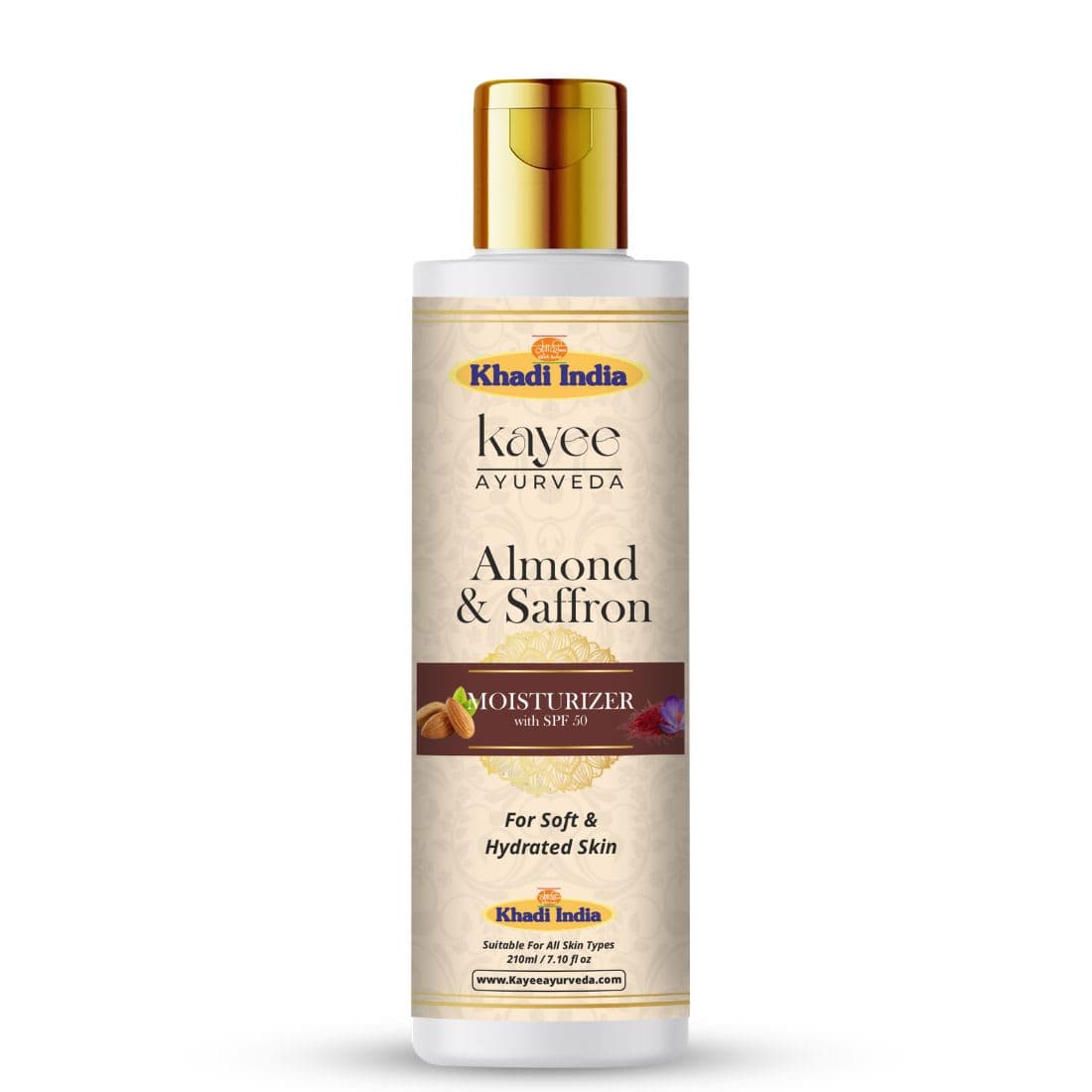
Kayee Ayurveda offers the Almond & Saffron Moisturizer (210 ml) and the Lavender & Jasmine Moisturizer (210 ml). Almond and saffron are both traditionally used in Indian skin care. Check the ingredient list on the product page to see if it suits you.
What about Ayurvedic ideas for winter?
Traditional Ayurvedic advice for the cold season often includes a gentle massage with oil before bathing, called abhyanga, to keep the skin feeling nourished. If you try it, use a small amount of a suitable oil and wash it off properly. This is a comfort routine, not a treatment for any skin condition.
When to see a doctor
If your skin is cracked and painful, has red, itchy patches that do not settle, or you suspect eczema or another skin condition, speak to a doctor or dermatologist. A moisturiser is not a substitute for medical care.
Frequently asked questions
How often should I moisturise in winter?
At least twice a day, and after every wash of the hands or body if your skin feels tight.
Can I use the same moisturiser on face and body?
Some people do. Face skin is more sensitive, so patch test first and stop if you feel any irritation.
Do I need sunscreen in winter?
Yes, if you are outdoors during the day. UV rays are present even when the weather feels cool.
This article is general information about traditional Ayurvedic hair and skin care. It is not medical advice. If you have sudden or patchy hair loss, a sore, itchy or flaky scalp, or skin that is painful, swollen or not improving, please see a doctor or dermatologist.