
Face Serums Explained: Vitamin C, Niacinamide, Hyaluronic Acid and More
Kayee Ayurveda · 11 November 2026
Serums are small bottles with big promises. They are lightweight, concentrated products meant to be used under a moisturiser. This guide explains the common ones in plain language so you can decide what, if anything, fits your routine.
What is a face serum?
A serum is a light liquid or gel with a higher concentration of an ingredient than a typical cream. You apply a few drops after cleansing and before moisturiser. It is an extra step, not a replacement for cleansing, moisturising and sun protection.
Common serum ingredients
Vitamin C
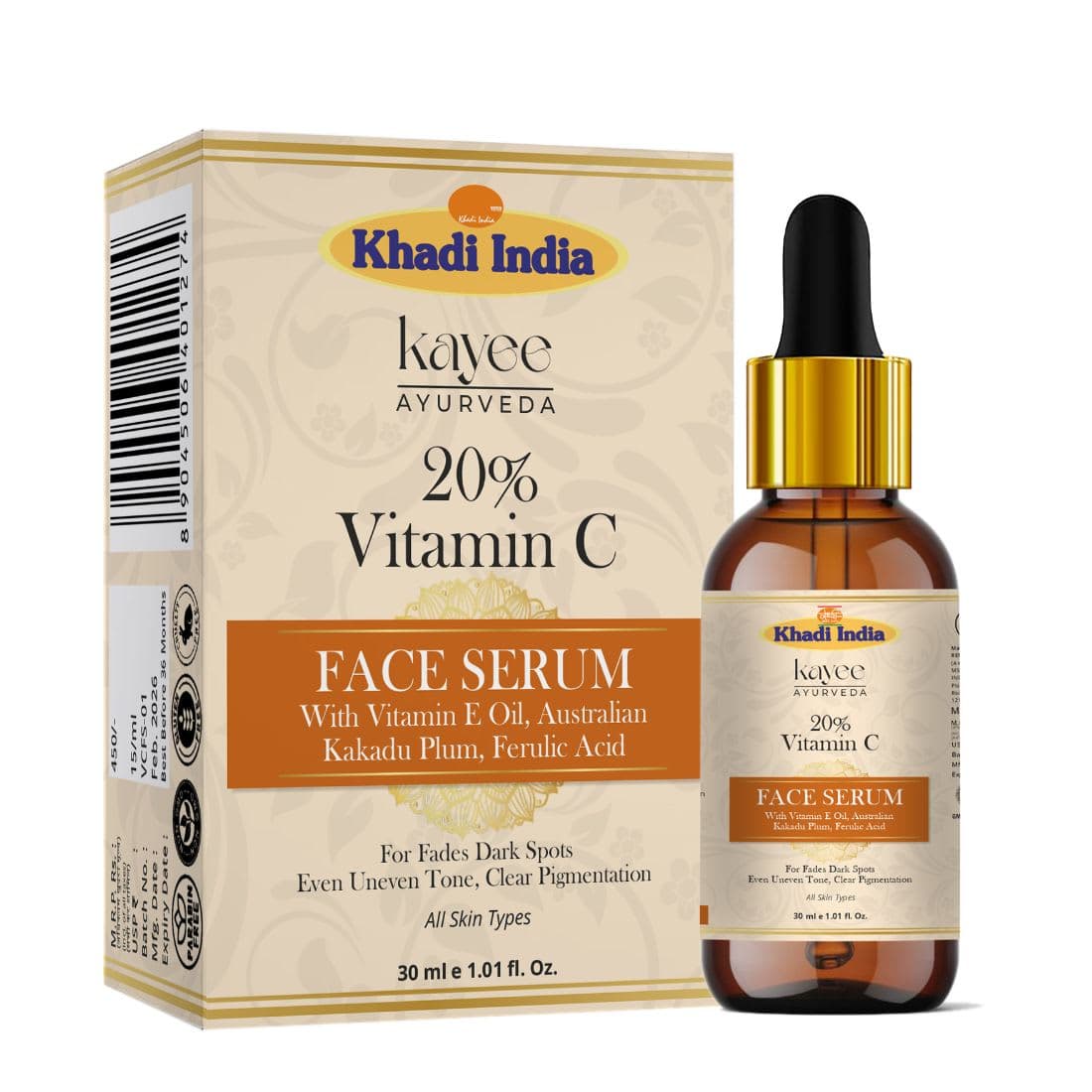
A popular antioxidant used in skin care. People use vitamin C serums as part of their morning routine, usually followed by sunscreen. It can sting if your skin is sensitive. See the 20% Vitamin C Face Serum.
Niacinamide (vitamin B3)
A widely used ingredient found in many routines. It is generally well tolerated, though a high percentage can still bother some skin. See the 10% Niacinamide Face Serum.
Hyaluronic acid
A substance that attracts and holds water, so it is used in hydrating products. It works best on slightly damp skin, followed by a moisturiser. See the 2% Hyaluronic Acid Face Serum.
Salicylic acid
A beta hydroxy acid used in products for oily, congested skin. It can be drying, so start slowly. See the 2% Salicylic Acid Face Serum.
Retinol
A vitamin A derivative used in night routines. It can cause dryness and irritation at first, and it makes skin more sensitive to the sun, so sunscreen in the morning is a must. It is not suitable during pregnancy, so ask your doctor if you are unsure. See the Retinol Face Serum.
Rice water
A traditional beauty ingredient in several Asian cultures, now found in modern products. See the Rice Water Face Serum.
How to start using a serum
- Patch test on your inner arm or behind your ear. See our patch test guide.
- Begin with one serum. Do not start several active products in the same week.
- Start slowly. Use it every second day for the first one or two weeks.
- Apply after cleansing on clean skin, 3 to 4 drops for the whole face.
- Follow with moisturiser and, in the morning, sunscreen.
What not to do
- Do not layer many active serums together.
- Do not use a serum on broken, burnt or inflamed skin.
- Do not skip sunscreen, especially with vitamin C, salicylic acid and retinol.
- Do not expect overnight results. Skin changes slowly and many people use a product for weeks before judging it.
Do you even need a serum?
A simple routine of a gentle face wash, a moisturiser and sunscreen already covers the basics. A serum is an optional extra. If you are new to skin care, start with the basics. Read our guides on choosing a face wash and the winter skin care routine.
When to see a dermatologist
If you have persistent acne, pigmentation that bothers you, or skin that reacts to everything, a dermatologist can assess your skin and suggest suitable treatment. Serums are cosmetics, not medicines.
Frequently asked questions
Can I use vitamin C and niacinamide together?
Many people do, but if your skin is sensitive, use them at different times of the day, or on different days.
Morning or night?
Vitamin C is commonly used in the morning and retinol at night. Hyaluronic acid and niacinamide can be used at either time.
How long until I see a difference?
Often four to eight weeks of regular use, and results vary from person to person.
This article is general information about traditional Ayurvedic hair and skin care. It is not medical advice. If you have sudden or patchy hair loss, a sore, itchy or flaky scalp, or skin that is painful, swollen or not improving, please see a doctor or dermatologist.