
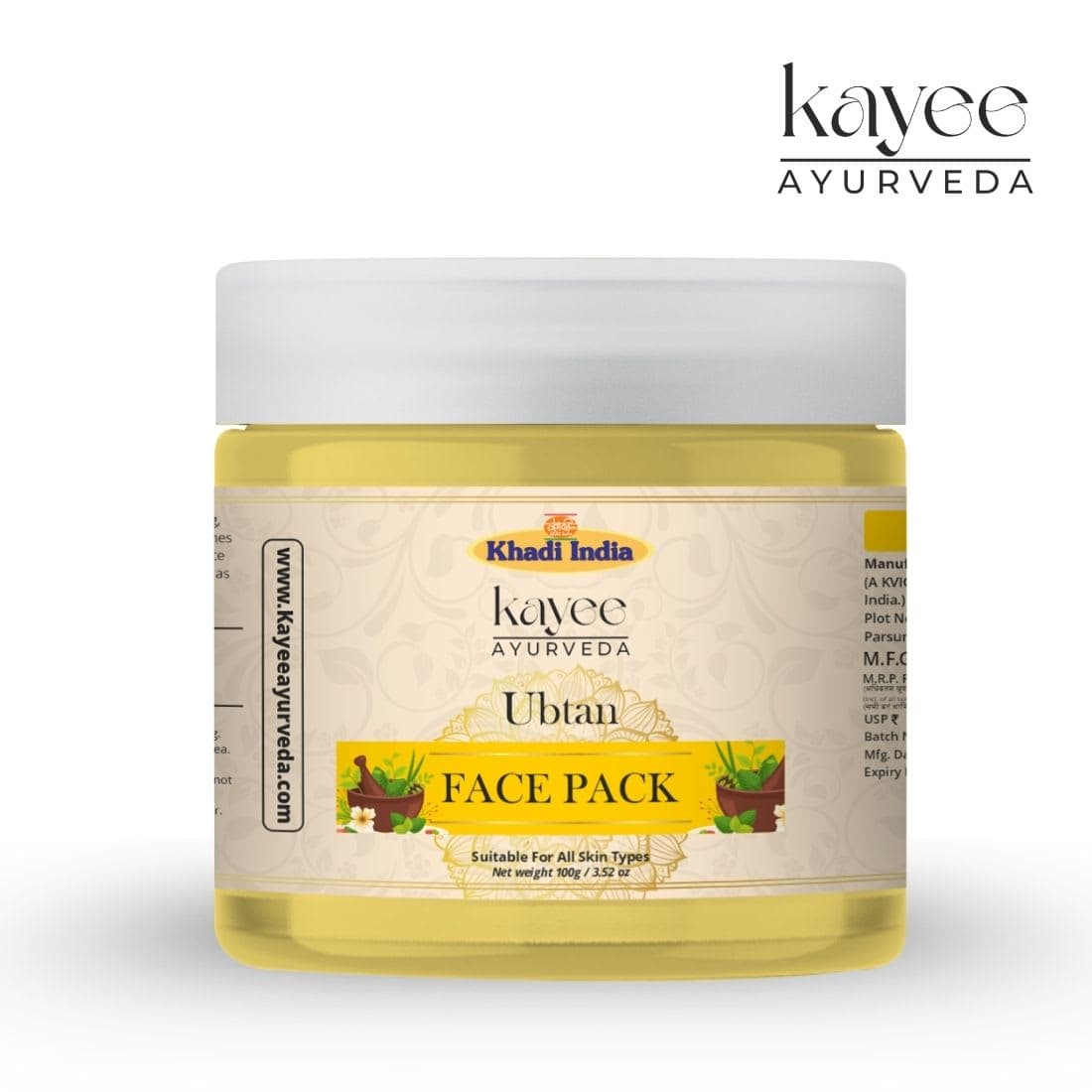
What Is Ubtan? The Traditional Indian Face Pack Explained
Kayee Ayurveda · 9 November 2026
Long before bottled skin care, Indian families made ubtan at home. It is a thick, fragrant paste, traditionally applied before weddings and festivals and as part of regular skin care. Today, ready-made ubtan face packs and scrubs make it easy to try.
What is ubtan?
Ubtan (also called uptan) is a traditional mix of flours, herbs and spices, mixed with a liquid such as water, milk, curd or rose water. Recipes differ from family to family and region to region.
Common ingredients in traditional ubtan
- Gram flour (besan): a fine flour made from chickpeas, used as a gentle cleanser.
- Turmeric (haldi): a common spice, traditionally part of Indian skin care.
- Sandalwood (chandan): valued for its fragrance and cooling feel.
- Rose petals or rose water: for fragrance and a soothing feel.
- Milk or curd: sometimes added to make the paste smoother.
The exact ingredients of any ready-made product are listed on its pack, so check them before you buy.
How is ubtan traditionally used?
Ubtan is applied as a paste to the face and body, left for a short time and then rubbed off gently as it dries, or washed off with water. It acts both as a mild cleanser and a gentle exfoliant. It has traditionally been part of bridal care and festive preparation, and many people simply like it as a weekly routine.
How to use an ubtan face pack
- Patch test first. See our patch test guide.
- Wash your face with a mild face wash and pat dry.
- Mix the powder with water, milk or rose water to make a smooth paste.
- Apply an even layer on the face and neck, avoiding the eyes and lips.
- Leave for 10 to 15 minutes. Do not let it dry completely if you have dry skin.
- Wash off with lukewarm water, massaging gently, then moisturise.
Face pack or scrub?
- The Ubtan Face Pack (100 gm) is meant to be applied as a mask and washed off.
- The Ubtan Face Scrub (100 gm) is meant for gentle scrubbing in circles for a short time.
Use either one once or twice a week. Do not scrub hard, and skip scrubs if your skin is inflamed or sore.
Who should be careful?
- People with very dry or sensitive skin, who may find ubtan drying. Moisturise well afterwards.
- People allergic to any ingredient on the pack.
- Anyone with active acne, cuts or sunburn on the skin.
Turmeric can sometimes leave a light yellow tint, especially on light skin or fabrics. Wash it off well.
Realistic expectations
Ubtan can leave skin feeling clean, soft and fresh. It does not change your skin tone permanently or treat skin conditions. Be wary of any product that promises that it will.
Related reading
Frequently asked questions
Can I use ubtan every day?
Once or twice a week is typical. Daily use can be too drying for many skin types.
Is ubtan good in winter?
It can be, but mix it with milk or rose water instead of plain water and moisturise afterwards.
Can men use ubtan?
Yes. It is not specific to any gender.
This article is general information about traditional Ayurvedic hair and skin care. It is not medical advice. If you have sudden or patchy hair loss, a sore, itchy or flaky scalp, or skin that is painful, swollen or not improving, please see a doctor or dermatologist.